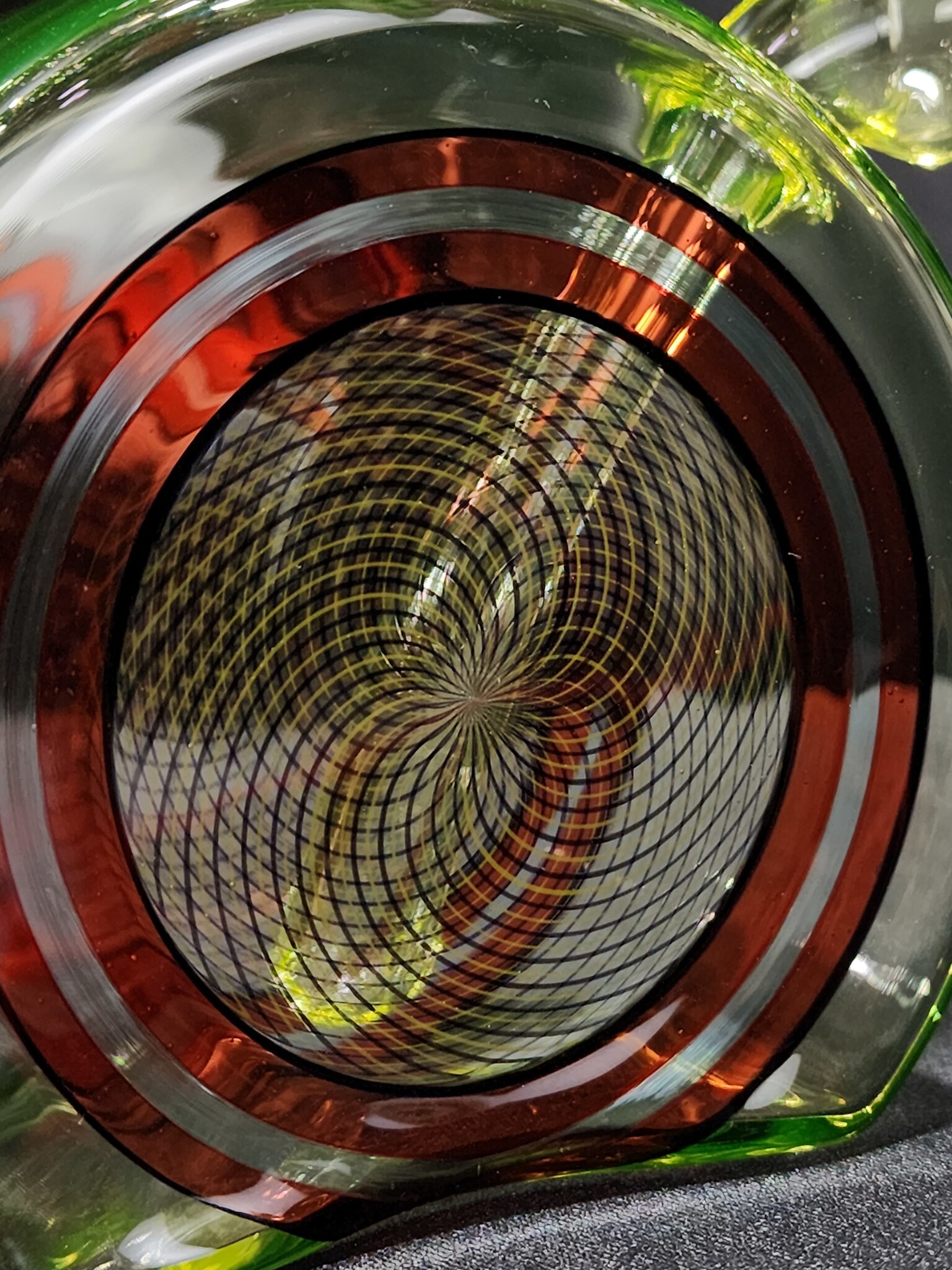
Photographing Glass: A Clear Record of Shape and Detail
A photograph can show the outline of a glass piece clearly and still leave its details difficult to read. A bright reflection may cover a signature. A dark background may hide an edge. One carefully chosen angle can make the piece look very different from another.
For documentation, the aim is a useful set of views. You want enough information to recognise the object, understand its shape and compare its condition later. A phone camera is a reasonable starting point; the important part is deciding what each photograph needs to show.
Give each photograph one job
Start with an overall view that includes the entire piece, with some space around its outline. Take another from the opposite side. Add side views where the shape changes or where an attachment disappears behind the body.
Then make a separate list of details: a signature, a colour transition, an applied decoration or an existing chip. Photograph those individually rather than expecting one wide image to explain everything.
The International Council of Museums’ Object ID checklist recommends overall photographs alongside close-ups of markings and damage. That is a useful distinction for a small personal record, too.
Check the background and reflections
Try a plain light background and a plain dark one, then compare which makes the edges easiest to follow. Keep the surface stable and uncluttered. Avoid balancing the piece on improvised risers just to improve the angle.
Before taking a photograph, look across the whole screen. Is a window reflection covering the area you want to record? Is the camera focusing on the background? Move the camera or the light and compare another frame.
Glass can reflect the room and the photographer; Nikon illustrates this problem in its guidance on photographing through aquarium glass. The setting is different, but checking what appears in the reflection remains a helpful habit.
Keep an honest reference set
For a condition record, keep the original files. If you crop or adjust a copy for easier viewing, retain the untouched version beside it. Avoid filters that change colour or remove visible surface details.
Take your reference photographs under the same lighting where practical. If you make an additional image under a different light source, label it accordingly. A photograph records how a piece appeared in that setup; it should not be treated as a complete description of every colour effect.
For scale, place a ruler beside the piece without letting it touch the glass. Keep written measurements as well, since a photograph can be awkward to measure accurately.
Make the files easy to find
Use a short, consistent file name: an object reference, the date and a view label such as front, base or signature. Put related receipts and notes in the same clearly named folder, with a backup elsewhere.
Before putting the piece away, review the images at full size. Confirm that small lettering is readable and that no important area is missing. Five clear photographs with defined purposes usually make a more useful record than twenty nearly identical ones.
General information about glass, craft and care. The Smoke Hut sells to adults of legal age in their province.