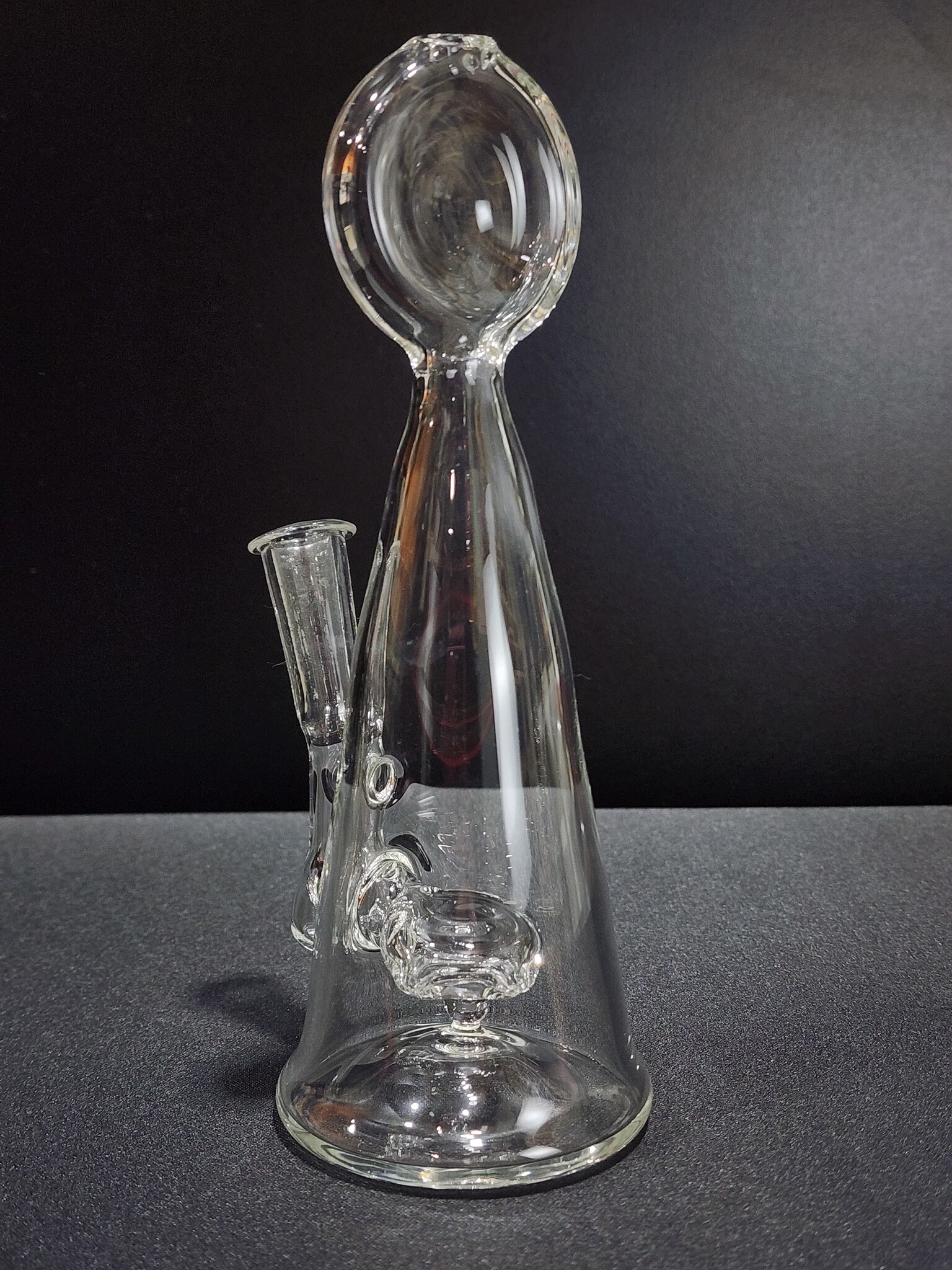
Solid and Hollow Glass: Understanding the Construction
A rounded glass form may be solid, hollow or assembled from sections with different construction. The outside silhouette does not always answer the question.
It helps to separate three kinds of description: the material, the process used to shape it and the structure of the finished object. “Borosilicate”, “flameworked” and “hollow” describe different things. Reading them together gives you a clearer picture of what the maker has produced.
What solid and hollow describe
In a solid section, glass occupies the body of the form. A hollow section has an interior space surrounded by glass walls. One finished object can contain both.
Think of those terms as a starting point for describing structure. They do not tell you the maker, the exact material or the time spent on the object. They also do not provide a complete account of strength or condition.
When examining a listing, look for an explicit description of the construction. A rounded shape, a dark patch or a bright reflection in a photograph is not enough to establish what lies inside.
Blowing is a forming process
The Corning Museum of Glass describes blowing as forming glass by inflating it. The resulting interior space is part of how the form is developed.
Sculpting and blowing can overlap within a maker’s practice. Corning’s resources on hot glass sculpting include work with both solid and blown forms. That is a useful reminder that a sculptural appearance does not automatically mean a piece is solid.
For a particular object, use the maker’s documented description. Avoid turning broad process terms into a detailed production story that the available information does not support.
Flameworking describes how glass is heated and shaped
Corning defines flameworking as shaping rods and tubes of glass softened in a flame. Lampworking is another name for the process.
That definition includes different starting forms. The word alone does not establish whether every section of the finished object is solid or hollow. A description can therefore be accurate and still need another detail: flameworked tells you something about the process, while solid or hollow tells you something about the structure.
Our introduction to borosilicate, colour and craft covers the wider material vocabulary. Keeping those categories separate makes technical descriptions easier to follow.
Ask what the description leaves open
Useful questions stay close to the object: Is this decoration solid? Is the listed weight for the whole assembled piece? Does the maker describe the body as blown? Are separate components included?
Do not test an uncertain construction by tapping the glass, inserting something into it or applying pressure. Ask for a documented answer or an additional photograph instead.
Annealing is another separate term. Corning describes it as controlled cooling that reduces strain after glass is worked; it is not a synonym for either solid or hollow construction.
A clear listing brings these details together without asking one word to explain everything. Material identifies what the glass is, process describes how it was worked, and construction helps explain the form you are looking at.
General information about glass, craft and care. The Smoke Hut sells to adults of legal age in their province.